
Existing lines stay in place
Read PLC, scan, operator, and ERP signals without making the first line wait for a full rebuild.

INDUSTRIES
A cleaner live layer for takt, quality, traceability, and shipment readiness.
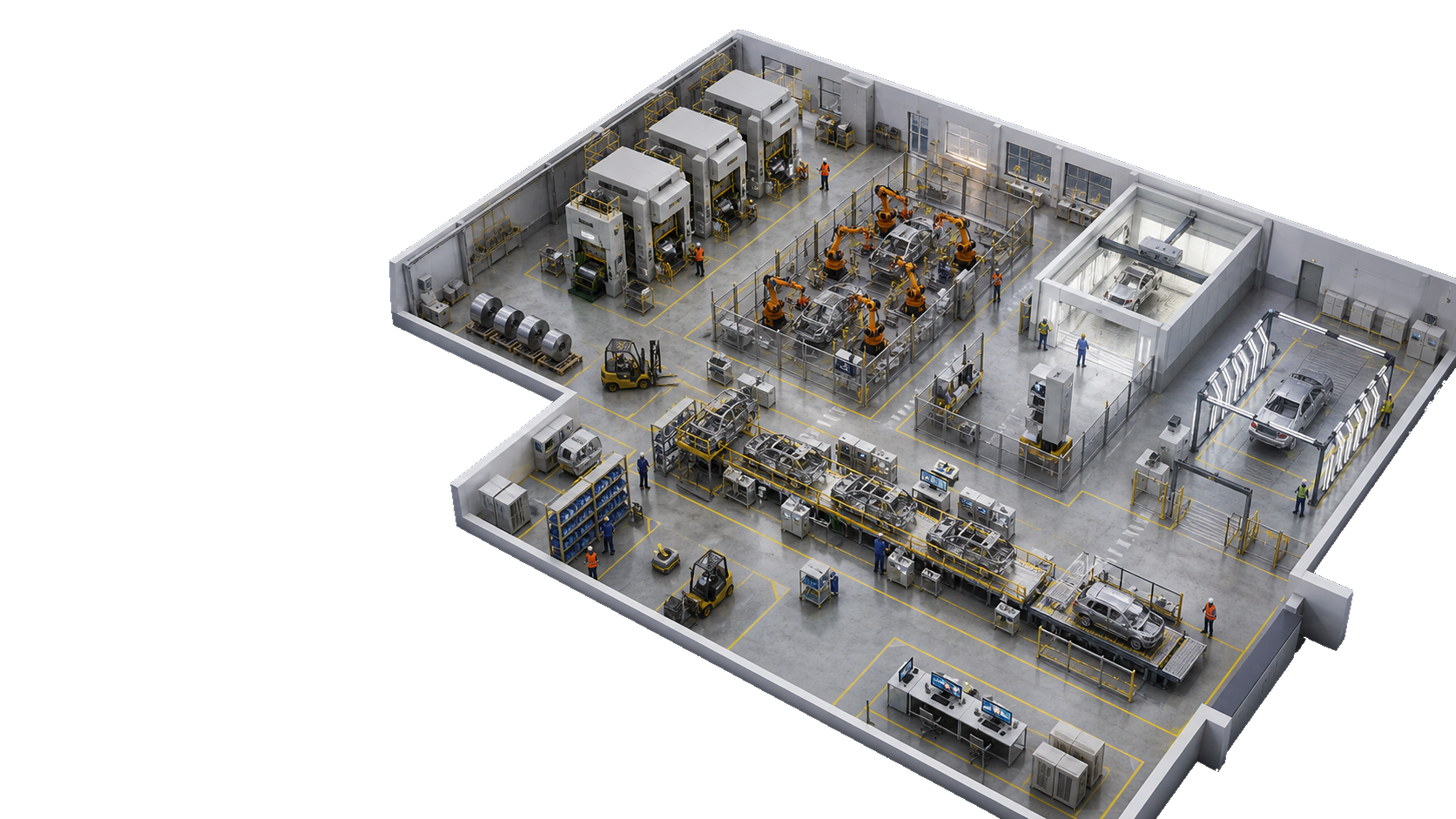
Track cycle count, setup drift, tonnage exceptions, and material readiness in the same shift context.
Station cycle, weld quality, rework reason, and operator confirmation are bound to the right vehicle sequence.
Capture curing, inspection, retest, and release signals without waiting for end-of-shift paperwork.
Codlean keeps model mix, part batch, tool verification, and station completion in one live flow.
Kanban, supermarket, AGV, and ERP stock signals are matched to the active production plan.
Hold status, missing checks, rework loops, and dispatch readiness are visible before the vehicle leaves the area.
INTERACTIVE LINE MAP
Codlean turns station events, operator checks, quality gates, and material calls into one readable automotive production view.
PLANT-READY LAYER
Read PLC, scan, operator, and ERP signals without making the first line wait for a full rebuild.
Every part, batch, check, hold, and exception follows the active vehicle through the shift.
Defects, retests, approvals, and release blockers remain tied to station, sequence, and reason.
Kanban, supermarket, AGV, and shipment signals are read against the active production rhythm.
SIGNALS THAT MATTER
Spot station drift before the next handover.
Shift leads see imbalance while it can still be corrected.Bind part, batch, and quality status to the vehicle.
Teams stop searching across forms when a vehicle is on hold.See quality and material blockers before dispatch.
Final release becomes a live queue instead of a late surprise.WHAT TEAMS ASK FIRST
Quick answers for the first automotive line conversation.
Yes. The first layer is designed to connect shop-floor events and planning signals without replacing the core system first.
No. Start from the scans, checks, and station confirmations already happening on the line.
Usually in handover clarity, release risk, missing material visibility, and faster root-cause context.